

Why Your Horse's Resilience Starts at the Cellular Level
- 3 days ago
- 7 min read
Updated: 4 hours ago
An Integrative Look at Oxidative Stress, Terrain Biology, and a Multimodal Protocol to Support Equine Health
By Le Anna K. | Rooted Saviors | Biofield App | Stewards Under Pressure
If you've ever watched a horse go through a viral outbreak and wondered why some horses barely flinch while others spiral — the answer isn't just about the virus. It's about the horse.
Modern horses face a physiological reality their ancestors never did: confinement, transport stress, artificial lighting, high-starch diets, and increasing electromagnetic exposure. These pressures quietly accumulate into something called oxidative load — and it's one of the most underappreciated factors in equine health.
This post is a deep dive into what oxidative stress actually is, how it shapes your horse's ability to fight illness (particularly viruses like EHV-1), and what a whole-body, integrative protocol looks like when we take the terrain seriously.
"Host terrain — not viral load alone — determines whether a horse experiences mild fever, respiratory signs, neurological involvement, or endothelial complications."
What Is Oxidative Stress — and Why Should Horse Owners Care?
At its simplest, oxidative stress is what happens when your horse's body produces more harmful reactive oxygen species (ROS) than its natural antioxidant defenses can neutralize.
Think of ROS like sparks from a fire. A few sparks are normal — even helpful. But when there are too many sparks and not enough fire suppression, things start to burn.
In horses, the sources of excess ROS are everywhere in modern management:
• Intense exercise and performance demands
• Transport stress
• Confinement and stall restriction
• Electromagnetic field (EMF) exposure from Wi-Fi, metal barns, LED lighting
• Inflammation and viral presence
• Poor air quality, dust, mold, ammonia
• Mycotoxins in feed
• High-sugar or high-starch diets
• Chronic cortisol elevation from stress
When oxidative stress becomes chronic, the downstream effects touch every major system in the horse's body — from the mitochondria that power every cell, to the vascular system, immune response, neurological function, and respiratory tissue.
The Oxidative Stress Cycle

Figure 1: The oxidative stress cycle — how triggers and downstream harms feed back into each other.
The Terrain Framework: What Determines How Sick a Horse Gets?
Equine Herpesvirus-1 (EHV-1) is a useful lens here because it illustrates the terrain concept so clearly. Some horses exposed to EHV-1 develop mild symptoms. Others spiral into respiratory crisis or neurological involvement. Same virus. Different outcomes.
Why? Because the internal environment of the host — what terrain biology calls the terrain — is doing most of the heavy lifting.
Host factors that worsen viral expression include:
• High oxidative load and low antioxidant reserves
• Poor mitochondrial energy output
• High sympathetic nervous system tone (the horse that's always "on edge")
• EMF-induced cellular depolarization
• Compromised circulation and lymphatic drainage
• Elevated cortisol from chronic stress
• Mineral imbalances — particularly magnesium, selenium, and zinc
When we reduce oxidative load and restore cellular homeostasis, we're not fighting the virus directly. We're strengthening the host's immune bandwidth so it can do its job better.
The Terrain Framework: What Determines How Sick a Horse Gets?
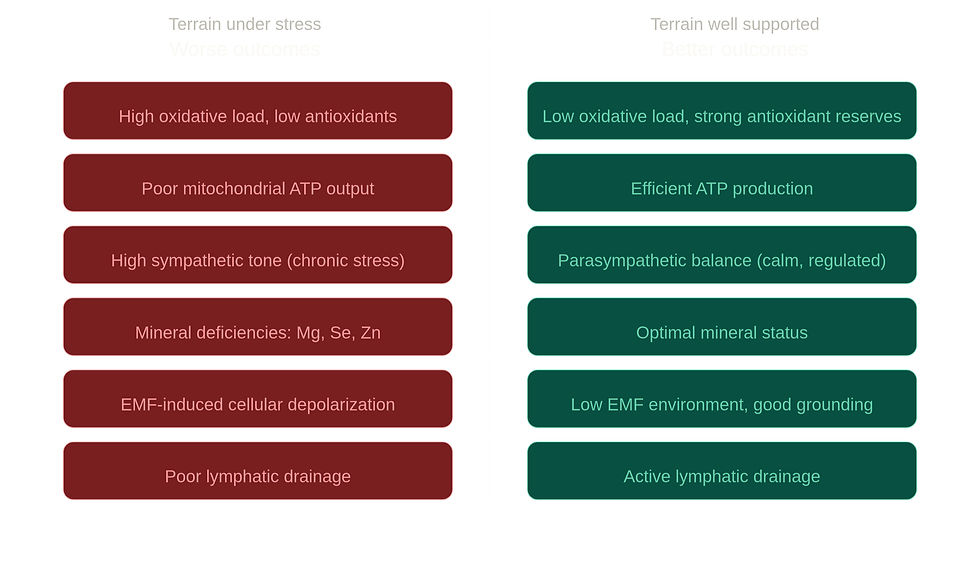
Figure 2: The terrain framework — host factors that push outcomes in either direction.
The goal is not to replace veterinary care — it's to build a horse whose terrain makes it harder for illness to take hold in the first place.
The Mitochondrial Connection
Mitochondria are at the heart of this conversation. These are the energy-producing organelles inside every cell, responsible for ATP production, regulating ROS, coordinating immune signaling, and even influencing how a cell responds to a virus.
When mitochondria are under stress, they produce excess ROS and enter a feedback loop of oxidative overload. Restoring mitochondrial health is therefore central to any resilience protocol.
That means:
• Supplying targeted antioxidants to interrupt the ROS cycle
• Stabilizing membrane electrical potential
• Supporting parasympathetic nervous system dominance (rest and digest, not fight or flight)
• Improving oxygenation and circulation
• Reducing electromagnetic interference
Electromagnetic Biology: The Piece Most People Are Missing
Horses are exquisitely sensitive to electromagnetic fields. This isn't fringe science — it follows from basic biology. Horses have a large, coherent heart field, high tissue water content, a conductive fascial network, high neurosensory reactivity, and a hoof-ground electrical exchange that has evolved over millions of years.
Therapeutic EMFs can help:
Technologies like PEMF (Pulsed Electromagnetic Field therapy), red light, near-infrared (NIR), and microcurrent work precisely because they interface with equine biology in measurable ways — increasing cell voltage, improving circulation, enhancing oxygen utilization, and stimulating mitochondrial ATP production.
Uncontrolled EMFs can hurt:
On the flip side, uncontrolled electromagnetic exposure — from Wi-Fi routers, metal barn structures, LED light flicker, power lines, and battery chargers left in stalls — can increase oxidative stress, interfere with nervous system regulation, and reduce cell membrane potential.
EMF modulation is not an add-on. It belongs in every serious equine wellness protocol.
Botanical Medicine: Nature's Antioxidant Toolkit
Herbs are concentrated sources of bioactive plant compounds that interface with equine physiology in documented ways. Here's a breakdown of the key botanicals and what they do:
Milk Thistle (Silybum marianum)
Regenerates glutathione — one of the body's most critical endogenous antioxidants. Hepatoprotective and reduces endothelial oxidative load. Critical for horses with high toxic burden.
Curcumin
A potent antioxidant and NF-κB modulator — meaning it helps regulate the inflammatory signaling cascade. Also provides vascular protection.
Ashwagandha
Works on the HPA axis to reduce cortisol-driven oxidative stress. Ideal for horses in high-stress management environments.
Ginger & Boswellia
Regulate the COX/LOX inflammatory pathways. Anti-inflammatory and antioxidant. Well-tolerated in horses.
Hawthorn
Supports endothelial tone and nitric oxide availability — directly relevant to vascular health during viral challenge.
Nettle Leaf
Provides micro-mineral support alongside antioxidant phenolic acids. A quiet workhorse in the protocol.
Licorice Root
Adrenal restorative and mucosal support. Particularly valuable during respiratory viral seasons.
Botanical Antioxidant Toolkit- What Each Herb Does

Figure 3: The botanical antioxidant toolkit — each herb's primary mechanism at a glance.
Each of these botanicals works through mechanisms grounded in established cellular and biochemical science. This isn't herbalism as folklore — it's phytotherapy as targeted nutritional support.
Sound Frequencies & Biofield Coherence
This is where the protocol gets more unconventional — but the science behind it is more solid than most people realize.
Sound frequencies influence heart rate variability, vagal tone, respiratory sinus arrhythmia, lymphatic rhythm, fascia relaxation, and mitochondrial resonance patterns. Mechanically, sound waves influence ion channels, entrain neural oscillations, reduce sympathetic load (which directly lowers cortisol and ROS generation), and improve cellular coherence.
The frequencies used in this protocol include:
• Theta brainwave entrainment — nervous system downregulation and cortisol reduction
• 528 Hz — historically associated with tissue repair and cellular coherence
• 963 Hz — linked to parasympathetic activation patterns
• Deep background hum (~40–80 Hz) — improves fascia responsiveness
Sound is a biological regulator. Used intentionally, it's one of the most accessible tools we have for shifting a horse out of chronic sympathetic overdrive.
Environmental & Management Factors That Load (or Lighten) Oxidative Burden
The barn environment itself is either contributing to or reducing your horse's oxidative load every single day. This protocol addresses:
• Air quality: ammonia, dust, mold, and particulate matter all increase oxidative stress
• Hydration and minerals: magnesium (a voltage stabilizer), sodium/potassium balance, and trace minerals are non-negotiable
• Sunlight and pasture movement: supports circadian regulation and provides natural red/NIR mitochondrial support
• EMF load: metal barns, Wi-Fi routers, LED flicker, powerlines, and battery chargers in stalls
• Lymphatic mobility: walking, stretching, and fascia hydration all support waste removal and immune function
The Integrative Multimodal Protocol: A Step-by-Step Framework
Here is how the components come together in a coherent, stepwise approach:
The Integrative Multimodal Protocol

Figure 4: The five-step integrative protocol — each layer builds on the last.
Step 1 — Nervous System Grounding (Frequency Work)
Begin with Theta-based entrainment, layering in 528 Hz and 963 Hz with a low-frequency background hum. This step alone can measurably reduce cortisol — and cortisol reduction directly decreases oxidative generation while freeing up immune resources.
Step 2 — Botanical Antioxidant Matrix
Introduce a synergistic combination of milk thistle, curcumin, ginger, boswellia, ashwagandha, hawthorn, nettle, and licorice. The combined effect: reduced ROS, increased ATP, improved tissue resilience, and reduced viral-expression vulnerability.
Step 3 — Mineral & Hydration Framework
Address magnesium, trace minerals, and electrolytes alongside clean or structured water. Outcome: increased cell voltage, improved mitochondrial efficiency, and reduced neuromuscular tension.
Step 4 — EMF Load Reduction
Remove chargers from stalls. Turn off routers at night. Avoid extended metal stall confinement. Increase grounding exposure (pasture time, bare earth contact). These simple changes reduce sympathetic tone, decrease oxidative load, and improve heart rate variability.
Step 5 — Lymphatic, Respiratory & Endothelial Support
Walking, stretching, red light therapy, clean air, and targeted herbs supporting the liver, lungs, and vascular system. The goal: increased waste removal, improved oxygenation, and reduced viral burden.
Who This Protocol Is For
This approach is designed to support horses navigating:
• EHV-1 exposure or active outbreak situations
• Respiratory viral stress
• Neurological vulnerability
• Transport-induced oxidative load
• Chronic stress barn environments
• Metabolic dysregulation
• Post-vaccination recovery
• Performance oxidative overload
A Final Note
This protocol does not replace biosecurity, vaccination, antiviral medication, NSAIDs, or veterinary diagnostics. It is designed to sit alongside those tools — supporting the host terrain, improving resilience, and reducing susceptibility to severe expression.
The science of oxidative stress, terrain biology, mitochondrial function, botanical medicine, and electromagnetic biology is well-established. What we're doing here is connecting those dots in a way that is practical, grounded, and actionable for real horses in real barns.
When we build horses whose internal environment makes it harder for illness to take hold, we change outcomes. That's the foundation of everything at Rooted Saviors.
Want to explore this protocol for your horse? Head over to rootedsaviors.com to learn more and connect with Le Anna.
References (Representative Citations)
Biradar, S. et al. (2018). Oxidative stress biomarkers in equine veterinary medicine. Vet Clin North Am Equine Pract.
Brewer, S. (2011). The role of phytochemicals in animal oxidative stress. J Vet Pharmacol Ther.
Ferlazzo, A., & Cravana, C. (2012). Stress and autonomic regulation in horses. Equine Vet J.
Hinchcliff, K. et al. (2004). Exercise-induced oxidative stress in horses. J Appl Physiol.
Kemp, J. et al. (2017). Autonomic regulation through acoustic stimulation. Front Neurosci.
Leeds, J. (2010). The physics and physiology of therapeutic sound. Music & Medicine.
McConaghy, F. et al. (2015). Redox balance and immune response in equines. Vet Immunol Immunopathol.
McKenzie, E. et al. (2008). Physiologic stress and oxidative damage in horses. Equine Vet J.
Olagunju, J. et al. (2020). Herbal antioxidants in veterinary practice. Phytother Res.
Porges, S. (2011). Polyvagal Theory and implications for autonomic health. Neurosci Biobehav Rev.
Reddy, A. et al. (2019). Phytochemicals and oxidative stress modulation. Free Radic Biol Med.
Smith, R. et al. (2010). Endothelial pathology in EHV-1. Equine Vet J.
Wilson, W. et al. (2013). Host factors influencing EHV-1 clinical expression. Vet Microbiol.
rootedsaviors.com | biofieldapp.com | stewardsunderpressure.com | Equine Wellness Blog


Comments